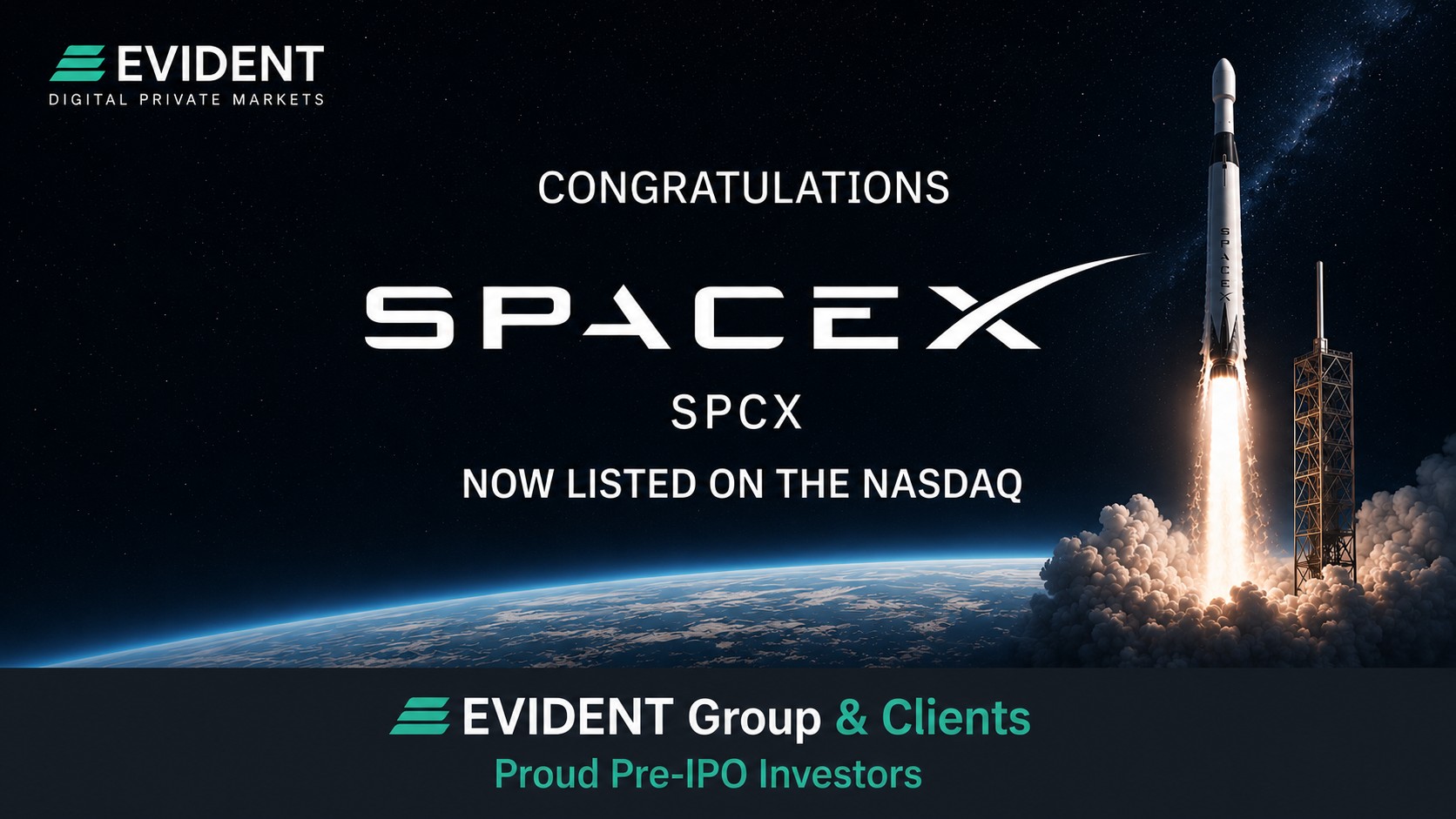
The Name Gets You In. The Structure Decides What You Own.
Two SEC cases in seven weeks involved funds sold on access to SpaceX and other pre-IPO names, and both Anthropic and OpenAI have said unapproved transfers of their shares may not be recognized. In each case, what decided the outcome for investors was not the company but the structure between the investor and the share.
Devanshee Kothari
Growth and Research Manager
Published
October 8, 2026
Secondary market transactions reached a record USD 240 billion in 2025, up 48%, according to McKinsey, and SpaceX went public on June 12, 2026. Alongside that growth, the SEC has brought two cases this year against fund managers that sold access to SpaceX and other pre-IPO companies.
Two cases, seven weeks apart
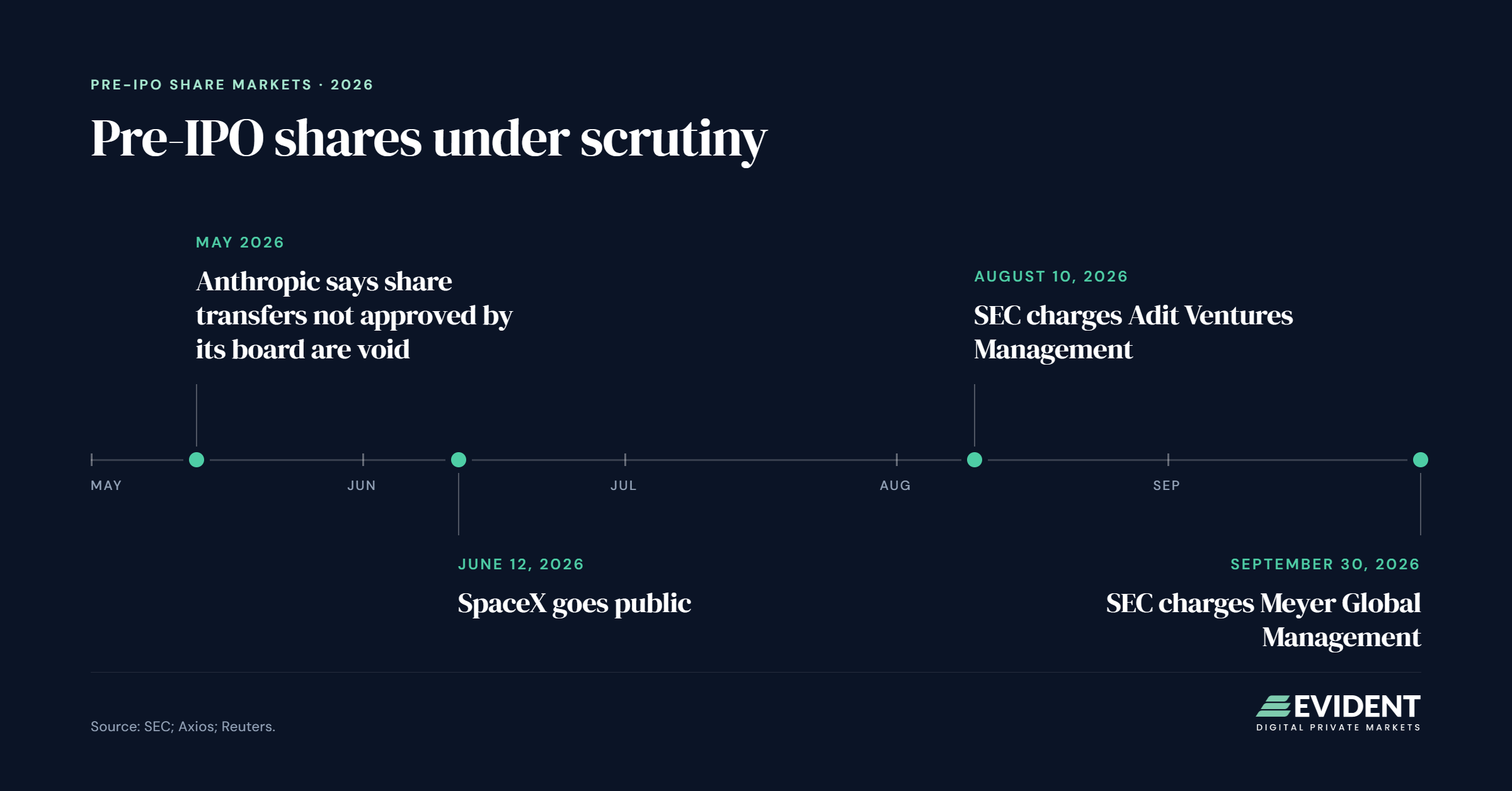
On August 10, 2026, the SEC charged New York-based Adit Ventures Management, its CEO Eric Munson and three affiliated general partners with defrauding investors in connection with pre-IPO shares, including SpaceX and Klarna. The SEC alleges that, from at least April 2019 through December 2024, the defendants falsely told an investor that a fund owned shares of a private pre-IPO company, bought pre-IPO shares themselves and then had client funds buy them at a higher price without the required consent, charged millions in unauthorized acquisition fees, and pledged client assets as collateral for a USD 10 million credit line used partly to pay their own obligations. The SEC also alleges that Adit failed to register as an investment adviser. The defendants agreed to a settlement without admitting or denying the allegations, subject to court approval, and Munson has publicly denied them, according to Reuters.
On September 30, 2026, the SEC charged Meyer Global Management and its CEO, Owen Meyer. According to the SEC's complaint, the firm raised at least USD 18.5 million from nearly 100 investors between 2019 and 2024, selling interests in funds that held pre-IPO securities, including SpaceX and OpenAI. The SEC alleges that at least USD 1.27 million of client capital was misappropriated across three schemes, while investors were told their money was safe or increasing in value.
In one of the firm's funds, investors had put in nearly USD 3 million for SpaceX exposure. The SEC says the firm did not pay a USD 46,020 capital call due in January 2024, did not respond to three default notices or to the lawsuit that followed, and the fund lost its entire SpaceX interest by court judgment in November 2024. On June 12, 2026, the day SpaceX went public, investors were told to stay tuned for news on their share distributions. These are allegations in a complaint the SEC has filed in court.
What the companies have said
In May 2026, Anthropic said it treats any sale or transfer of its stock that its board has not approved as void, and will not record such a transfer on its books, according to Axios.
OpenAI's published notice takes a similar position. It says OpenAI equity cannot be transferred, directly or indirectly, without the company's written consent, and that unauthorized transactions may result in the invalidation of the underlying equity. It also says that not every offer of OpenAI equity, or exposure to it, is a problem. What matters is whether the transfer has the company's approval.
The Meyer complaint shows how this plays out. In 2021, one of the firm's funds agreed to buy an interest in a third-party fund that held SpaceX shares. That fund's operating agreement required its approval for any transfer, and it declined. According to the SEC, investors were nevertheless told the investment had closed, and later received statements showing gains on it.
Four questions that decide what you own
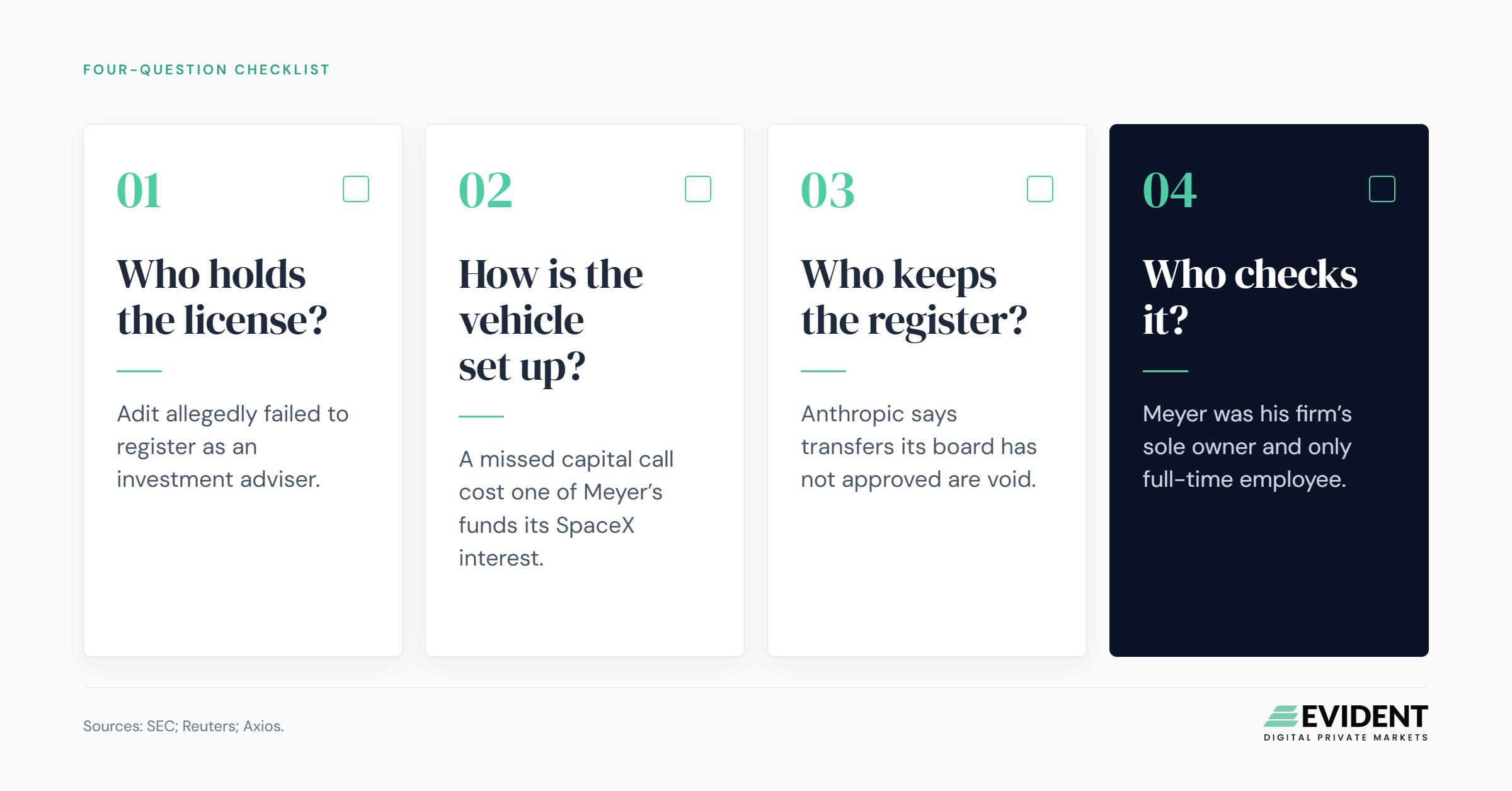
Who holds the license. The SEC alleges that Adit failed to register as an investment adviser. Meyer Global Management filed with the SEC as an exempt reporting adviser, according to the complaint.
How the vehicle is set up. According to the complaint, Meyer's funds held their exposure through funds run by third-party advisers. Each of those funds came with its own agreements and obligations, such as capital calls, and investors relied on the manager to meet them and report on them. The SpaceX forfeiture came from a single missed capital call that, according to the SEC, investors were not told about.
Who keeps the register. Anthropic's position is that a transfer its board has not approved will not appear on its books and records. In the Meyer case, investors received account statements showing SpaceX interests that, according to the SEC, the fund did not hold.
Who checks it. According to the complaint, Meyer was his firm's sole owner, sole managing member and only full-time employee, and oversaw all investment decisions, fund management and investor relations. The largest investor in the forfeited SpaceX fund learned of the loss only after hiring counsel to look into his investment.
The SEC's Corey Schuster said the Meyer case shows how fraudsters can exploit the "allure of exclusive, high-return pre-IPO access." The name is what draws investors in. The license, the vehicle, the register and the oversight decide what they actually own.
At EVIDENT, every opportunity is structured as a digital security under regulatory supervision. Fund administration, investor services and transfer agency are run in-house under a separately licensed administration entity, and distribution runs through a Hong Kong SFC-licensed broker-dealer.
.jpeg)